
What a Call Time Really Means for a Live Show Crew
A call time is not the hour the broadcast starts. Tom Fletcher explains what the term covers, why crews arrive when they do, and how it shapes a day on a live interview or panel show.
6 minutes to read
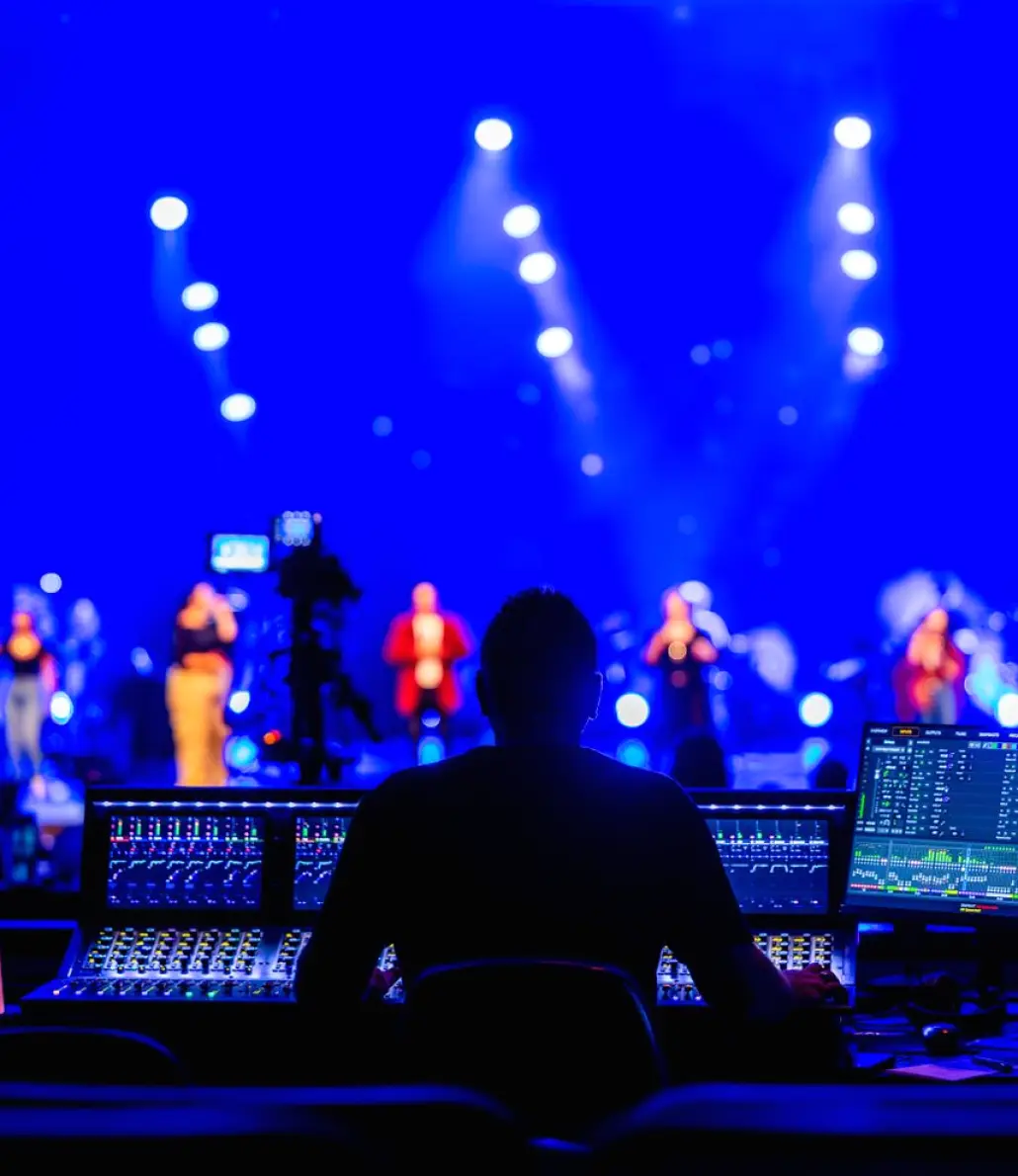
Call time is not transmission time
Producers new to live television often read a call sheet and see two times that look far apart: the call and the transmission. The call time is when the crew must be on site and ready to work. Transmission is when the programme goes out. Everything that has to happen between them is the reason the gap exists, and it is rarely as generous as it looks from the outside.
On a typical interview or panel show our crew arrives well before the guests, the presenter or anyone from the channel side. That is deliberate. A camera operator who walks in as the presenter sits down cannot fix a soft focus, a sticky pedestal or a prompter that reads too small. Those faults are cheap to solve in a quiet studio and expensive to solve with a live clock running.
When we say the call is early, we mean the crew is there to protect the start of the show, not to fill time.
What happens in the hours after the call
The first part of a call is physical. Cameras come off their covers, cables are checked along their length, heads are balanced and the prompter is lined up with the lens. Nothing about this is exciting, but it is where most live problems are found. A cable that was fine last week can have a bent connector today, and the only moment to learn that is before anyone is watching.
The second part is communication. Intercom is tested with every position, not just the ones that seem important, because a dead talkback channel on a single camera can cost a shot at the wrong moment. The operators agree with the director how cues will be given and what each person will say when something drifts.
Only then does the crew move on to framing, which is the part most people picture when they imagine the job.
- Equipment out, powered and checked
- Intercom tested on every position
- Framing and focus set against stand-ins
Why stand-ins and walk-throughs matter
Once the basics are sound, we ask for someone to sit in the guest chairs. A stand-in lets the operators set headroom, check focus at the real distance and see how the lighting falls on a face rather than an empty seat. Without one, framing is guesswork, and guesswork tends to show up in the first minute of transmission.
A walk-through goes further. The director runs the opening, a change of speaker and the close, so that each operator knows when they will move and where to. For a panel with four guests the camera plan is a small piece of choreography, and it works only if it has been done at least once before it matters.
We do not treat the walk-through as optional on shorter shows. A twenty-minute interview has fewer moments, but each one carries more weight.
Day rate, season rate and how the call fits in
Crew support comes on a day or a season basis, and the call time sits inside that arrangement in a way worth understanding. A day booking covers the call, the preparation, the show and a sensible period to clear down afterwards. It does not usually stretch to cover a presenter who arrives an hour late or a studio that is not yet available when the call begins.
On a season basis the picture is gentler. The same crew comes back each week, learns the set and the habits of the programme, and the call can often be shorter because faults are known and fixed. Familiarity is the real saving there, more than any adjustment to the rate.
If the site you are using needs access arrangements, tell us at booking, since a locked door at the call time costs the whole day.
Reading a call sheet before the day
A good call sheet names the call time for each role, since the camera crew, the sound operator and the gallery staff may not all start together. If yours lists one time for everybody, ask whether that is intended. A single early call for all roles can waste hours, while a single late call can leave the gallery waiting for cameras that are not ready.
Look also for the rehearsal slot and the position of any breaks. If the sheet shows rehearsal and transmission butting up against each other, the crew will have no room to fix anything the rehearsal reveals, and a rehearsal that finds nothing wrong is usually one that was not looked at closely.
We are happy to read a draft call sheet and say plainly whether the times are workable.
- One call time per role, not one for all
- A rehearsal slot with room behind it
- Breaks placed where the crew can reset
What a calm start looks like
The best sign that a call time was right is that nothing dramatic happens. The presenter sits down, the director counts in and the operators are already on their marks. Nobody on screen knows how many small things were checked to make that possible, and that is exactly how it should be.
It is tempting to trim the call to save a little on the day, and sometimes that is reasonable, for a simple one-camera interview in a studio we already know. For a new set, a new director or a live audience, we advise against it. The cost of an extra hour is small beside the cost of a show that starts on its back foot.
In my experience the shows that run calmly are the ones where the call was treated as part of the production, not as an overhead.
A call time is the working margin that lets a live show begin without drama. It covers equipment checks, intercom, framing and a walk-through, and its length should match the set, the crew and the format. If you are planning a day or a season and are unsure what call suits your programme, send us the draft call sheet through the contact page and we will go through it with you.
Keep reading
Six Studio Fit-Out Mistakes We Keep Finding, and How to Avoid Them
A camera operator's view of the errors that surface when a television studio is planned and built: layout, cabling, furniture and handover, and the simple habits that prevent each one.
What Acoustic Treatment and Audio Costs, and What Moves the Price
A plain look at what sits behind a quotation for studio sound treatment, microphones, mixing and talkback, and which choices make the figure rise or fall.
Send us a message
Email: [email protected]