
How a Studio Wall Becomes Quiet: Acoustic Treatment on Site
A walk through how we measure, treat and test a room's acoustics, from the first clap in an empty studio to the last talkback check before rehearsal.
6 minutes to read
Starting with an empty room and a clap
Every acoustic job we take on begins before any panel is ordered. We walk the room with a notebook, clap our hands, and listen to how long the sound hangs in the air. A bare warehouse unit or a converted meeting hall will often ring for a second or more, which is far too long for speech that has to be understood on the first hearing.
We then take measurements at several positions where presenters, guests and microphones are likely to be. The readings give us a decay time across low, middle and high frequencies, and they show whether the problem is a hard floor, a flat ceiling, a glass wall or all three. Those numbers go into a short written note that the client keeps.
The note also records the noise we cannot treat with panels: air handling, traffic through thin walls, lighting transformers humming. Knowing these early lets us plan around them rather than discover them during the first rehearsal.
Choosing what goes on the walls and ceiling
Treatment is a balance. Too little leaves the room echoing, too much makes it dead and tiring, and presenters begin to sound as if they are speaking into a cushion. For most news and interview sets we aim for a controlled, natural sound that an editor can add a little reverb to later, not one that has to be rescued.
Mid and high frequencies are the easy part, handled by absorbent wall panels at ear height and ceiling clouds above the set. Low frequencies need deeper material or bass traps in the corners. We explain the choice to the client in plain terms, because the panels also have to suit the look of the studio and survive years of being brushed past.
Weight and fixing matter as much as performance. Ceiling elements are hung from rated points, and we check what the structure above can carry before promising any layout.
- Wall panels at presenter ear height
- Ceiling clouds over the main set
- Corner traps for low frequency build-up
- Fabric finishes that match the set colours
Fitting the treatment around the cameras and lights
A studio is not an empty box for long. Cameras need to move, lighting rigs hang from the same grid, and cable runs cross the same walls we want to cover. We draw the acoustic layout against the camera plan and the lighting plan, so that a panel never ends up exactly where a robotic head needs to swing.
Daniel, our head of studio engineering, marks the cable routes first. Microphone lines, intercom and power are kept apart where they run in parallel, which avoids the faint buzz that is so hard to trace once the walls are closed up. Panels go on afterwards, leaving access to floor boxes and wall plates.
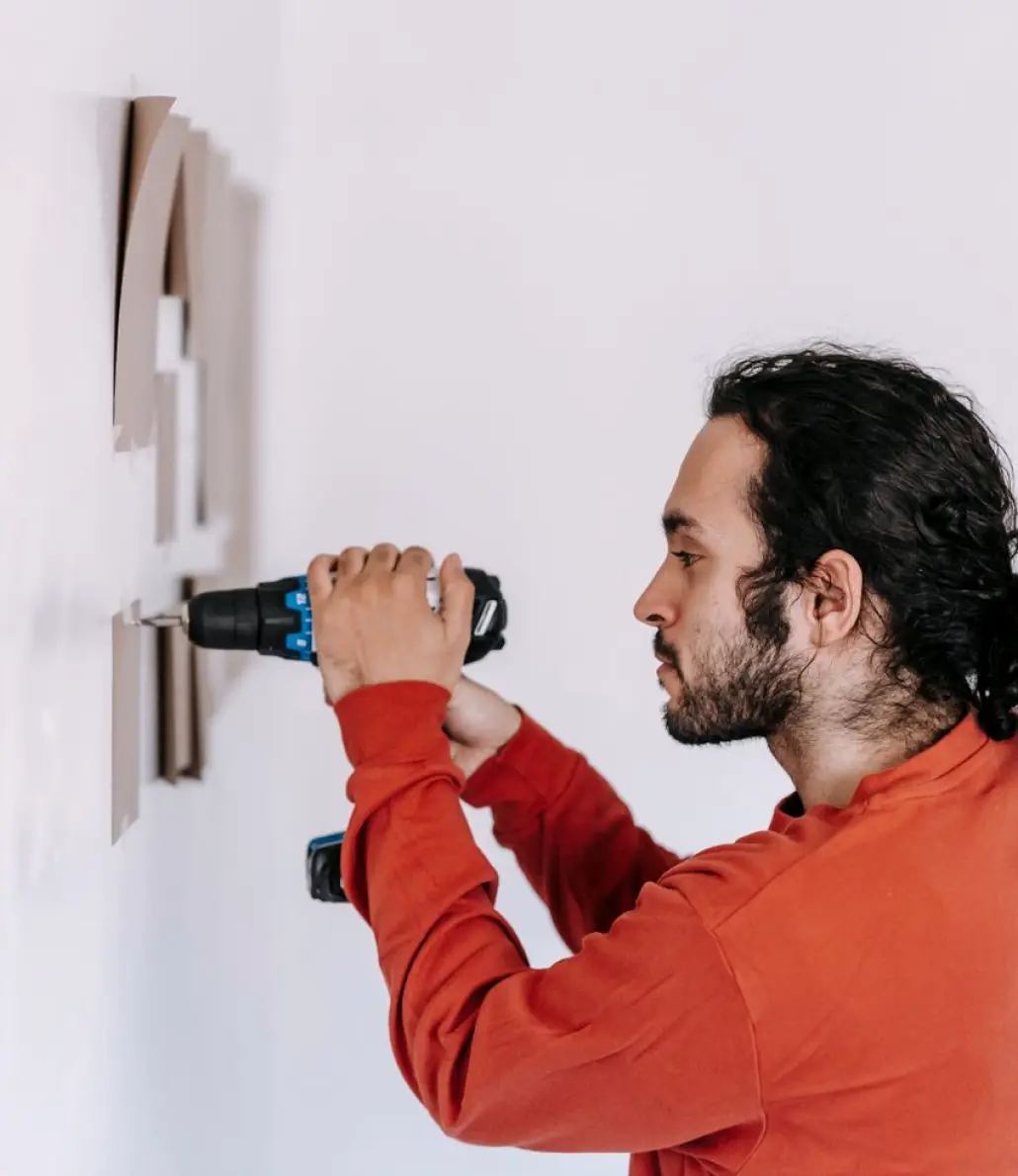
On the fitting days the work is quiet but methodical: marking out, drilling, fixing, checking level. Nothing is glued where it might later need to come off for a repair.
Microphones, mixing and the talkback chain
Treating the room is only half of the job. The audio chain has to be installed so that what the microphone hears reaches the gallery without being coloured on the way. We choose microphones to suit the format: lavalier for a standing presenter, boom or desk microphones for a panel, with a spare of each type kept in the rack.
The mixing desk is placed in the gallery with sensible gain staging, so that operators are not riding faders at the very top of their travel. Talkback matters just as much. A director who cannot reach a presenter's earpiece at once will lose time on air, so we test every route in both directions, including the quiet path to the floor manager.
Each connection is labelled at both ends, and the labels match the drawing handed over at the end.
- Microphone choice matched to the format
- Gain structure set with headroom in hand
- Talkback tested in both directions
- Cables labelled at both ends
Testing before anyone says a word on air
Once the treatment is up and the audio is wired, we repeat the clap test and the measurements from the first visit. The decay time should have dropped to a figure that suits speech, and we compare readings position by position so that no corner of the set behaves differently from the rest.
Then comes the listening. We ask a colleague to read from a script at normal volume, and then to move around the set while we listen in the gallery. Hollow patches, harshness on certain consonants or a hum that comes and goes all show up this way, and we fix them while the equipment is still unpacked.
Finally we run a full rehearsal with the crew who will use the room. Their comments are written down, and small adjustments are made the same day.
What we leave with the client
Handover is a short, practical meeting, not a pile of paperwork. We give the client the measurement notes from before and after, the cabling and patching drawings, and a simple list of settings for the desk and talkback. If someone new joins the crew next spring, they can pick up the room from those pages.
We also say plainly what the room will not do. A treated studio inside a noisy building will still pick up a lorry reversing outside, and no panel changes that. Where there is a remaining weakness, we write it down along with the options for dealing with it later.
Our phone line stays open after the build, and a short follow-up visit after the first few broadcasts is common.
Good studio sound is rarely one clever product. It is a measured room, panels placed with care, microphones suited to the format, talkback that works both ways and a test before anyone goes on air. These autumn weeks, with studios being prepared for the winter schedule, are a sensible time to check how your own room sounds.
Keep reading

A checklist to work through before you commission a studio build
Before drawings are signed off, a producer can settle the questions that decide how a new television studio behaves for years. Helen Marsh sets them out in the order we ask them.

Which Studio Cameras Do You Actually Need for a Live Interview Set?
The question producers ask us most: how many cameras, which heads and what vision mixing a small live set really needs, answered plainly with the reasoning behind each choice.
Preparing Your Gallery for the Darker Months of Live Broadcasting
Autumn brings longer schedules and fewer second chances. Helen Marsh sets out how to test intercom, graphics and playout together in these weeks, so the first live show of winter runs calmly.
Send us a message
Email: [email protected]